
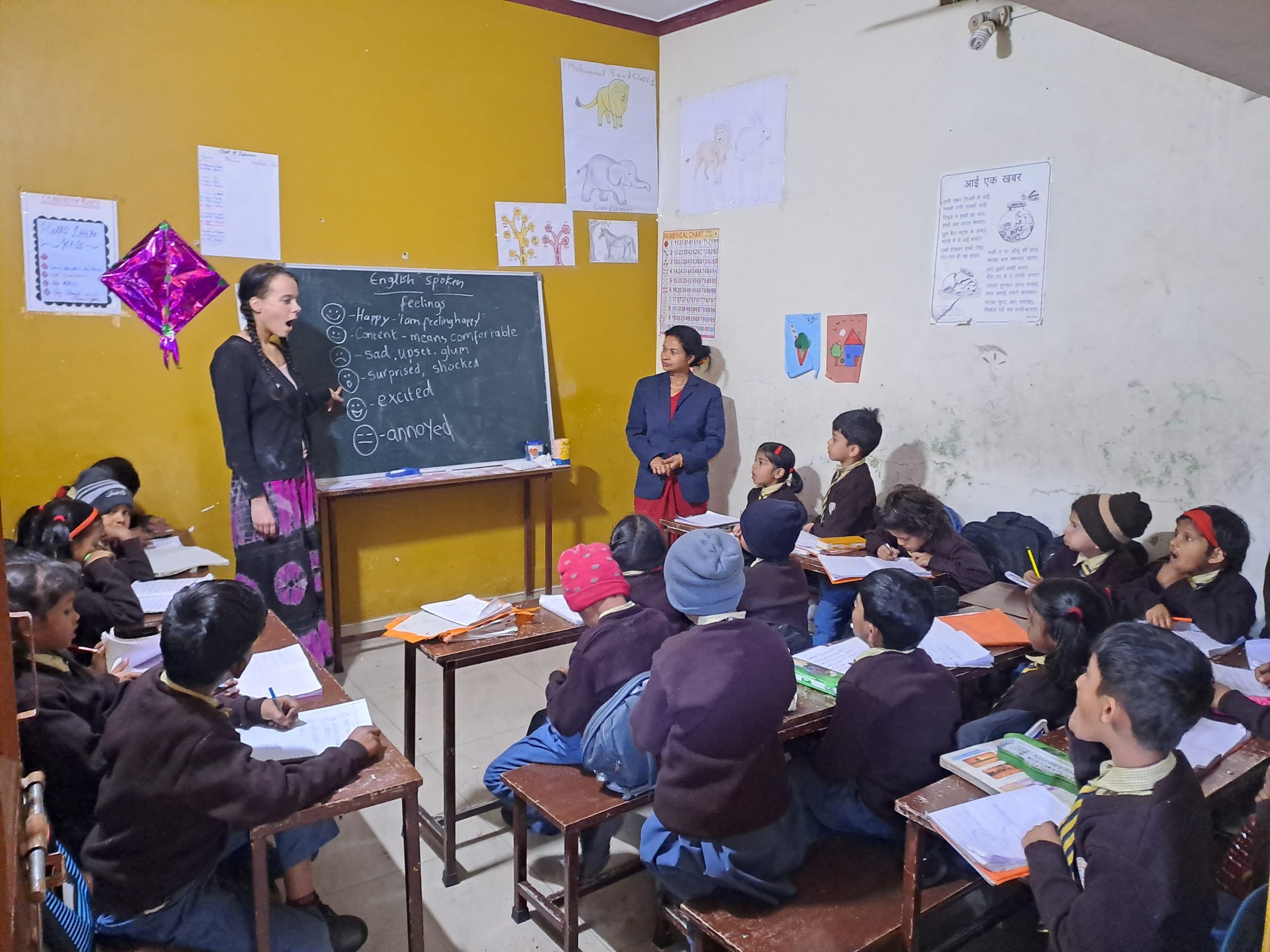
At WES Foundation, we focus on helping students develop strong communication skills from a young age. In a recent Spoken English class for Class 1, Miss Erica, our volunteer from Melbourne, Australia, conducted an engaging session on facial expressions and their role in effective communication.
Understanding Facial Expressions
Miss Erica began the session by explaining how our faces can express emotions even before we say a word. She told the students that when we speak, our expressions and tone of voice help others understand us better.
She introduced basic facial expressions such as :- Happy, Sad, Angry, Surprised, Confused
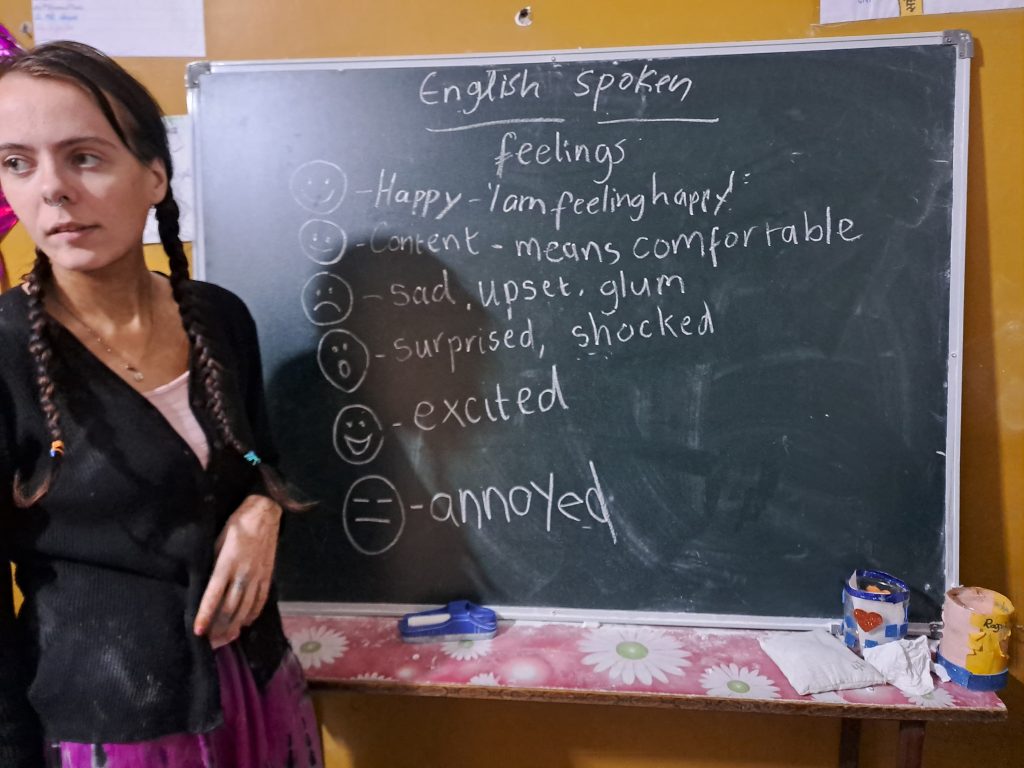
To make it fun, she made different faces and asked the students to guess the emotion. The students laughed and eagerly participated, trying to imitate the expressions.
Connecting Expressions with Spoken English
Once students understood the expressions, Miss Erica taught them how to use them while speaking in English. She gave them short sentences and phrases to practice with the right expression. For example:
“I am so happy today!” (With a big smile)
“Oh no! I lost my toy!” (With a sad face)
“Wow! That’s amazing!” (With a surprised look)
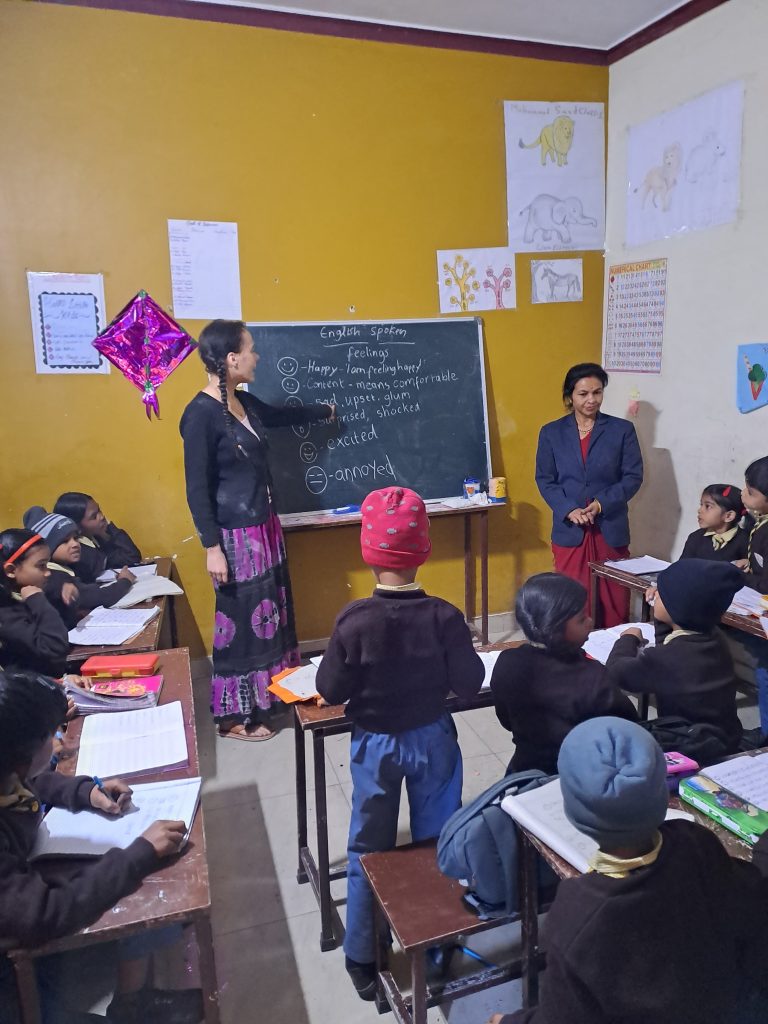
Students took turns coming to the front and practicing these lines with expressions. Miss Erica guided them on how to match their tone and body language with their words.
Fun Activity: Expression Game
To make learning more exciting, Miss Erica introduced an Expression Game. She wrote different emotions on slips of paper and had students pick one. They had to say a sentence in English using that emotion while the class guessed what they were feeling.
Some students were a little shy at first, but as the activity continued, they gained confidence and enjoyed the challenge. The class was filled with laughter and excitement as students experimented with different expressions and voices.
Building Confidence in Communication
By the end of the session, students not only learned about facial expressions but also became more confident in speaking English. Miss Erica praised their efforts and encouraged them to practice using expressions in daily conversations.
This fun and interactive lesson helped Class 1 students develop their spoken English skills while understanding the power of facial expressions in communication.